If you are organising a study trip to Malta in 2026, these practical tips will help you avoid the most common mistakes and make the most of your experience on the island, whether you are a teenager or an adult.
My name is Ziad, I am 18 years old and I participated in an experience of School-Work Training (FSL) in Malta. During my stay I learned many things, also thanks to some mistakes made in the first few days.
In this article I share the 5 tips I wish I had received before leaving, so you can make the most of your experience in Malta, saving time and money.
- Water in Malta: is tap or bottled better?
Tap water in Malta it is drinkable, but it has a different flavour from the Italian one because it comes largely from desalination plants.
One of the first mistakes I made was drinkingtap water. In Prato I was used to doing it and I took it for granted that it was the best choice in Malta too.
Personally, after drinking it in the first few days, I preferred to switch to bottled water.
My advice is to buy it in supermarkets, where it costs much less than in bars, which can charge up to €3 for a bottle.
- Avoid unnecessary credit card fees
Before leaving for Malta, check if your bank applies Credit card fees on withdrawals abroad. This allows you to avoid unexpected costs on withdrawals and payments abroad.
I thought using the cash money it was more convenient, because this way I could keep my expenses under control. More than once I didn't take into account how much money I was spending by paying by card.
So in Malta, having a tight budget, I decided to withdraw money and pay with cash. Only after a few days did I realize that my bank was applying fees that I hadn't considered. Between small withdrawals I found myself spending more than expected.
Banks like UniCredit and Poste Italiane provide up to 2 euros in commissions on withdrawals plus there is the increased action of the Maltese ATM. With a Mediolanum credit card I spent 5.95 in commissions in total.
My advice is to inform you before departure and, when possible, pay directly by card. In Malta almost all supermarkets, shops and restaurants accept electronic payments.
- Don't underestimate the traffic in Malta, my advice? Leave early
The traffic in Malta is particularly intense during peak hours, i.e. between 7 and 9 am and between 5 and 7 pm. If you need to get to school, work or take a bus, try to leave at least 20-30 minutes early than the scheduled time.
Before arriving I thought that, since Malta is a small island, getting around would be quick and easy. In reality, the traffic was one of the aspects that struck me the most. I often found congested roads, late buses and long journey times, so much so that I was even late for work.
My advice is to always leave a little early and, when possible, choose to travel on foot. In many situations it can be the fastest solution.
- Plan a realistic budget
Consider a realistic budget to have to spend on everything what is not included in the package you purchased. Another piece of advice I would like to give is to carefully plan the expenses of the first few days.
Remember that the accommodation asks for a security deposit of 30 euros, which however will be returned to you at the end of your stay.
In my case, between clubs, discos and dinners out, the money I had saved for the holiday went away faster than I imagined.
My advice is to start with a small extra fund to cover the initial expenses without worries.
If you want to learn more about the topic, also read our article dedicated to How much spending money should you take to Malta? A guide for teens.
- Find out before paying to enter the premises
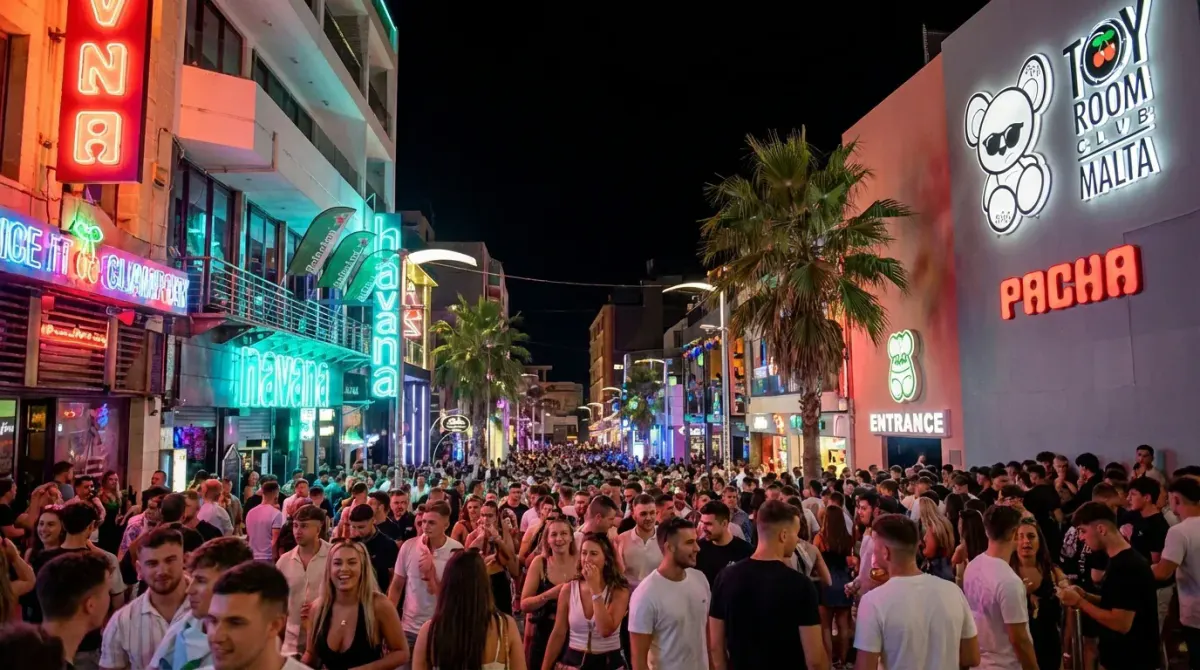
Before entering the Paceville premises, always check whether entry is free or paid. Many students think that all clubs require a ticket, but this is actually not the case.
If you love nightlife, you will probably visit Peaceville, the most famous area in Malta for bars and nightclubs. Here locals like Tokyo, Social Club and Nordic Bar they often offer entry free.
Other clubs, such as the Toy Room or theHavana, instead require an entrance fee that can vary between €10 and €20, depending on the evening.
My advice is to inform yourself before entering and compare the different options: paying a more expensive entrance does not necessarily mean having more fun.
I hope these tips for a study trip to Malta can help you avoid the mistakes I made.
With a little organisation you will be able to live your experience with greater peace of mind, saving time and money and focusing on what really matters: improving your English, meeting new people and enjoying everything Malta has to offer.
If you are thinking of studying English abroad and want to understand which solution is best for you, contact us up WhatsApp, do a free quote or follow us on ours social.
FAQ
What is the most common mistake when choosing a study trip?
Evaluate only the initial price without checking school, opening hours, location, accommodation and services included. Two apparently similar offers may have different transfers, meals, materials or activities. Before deciding, it is best to compare a written summary with dates, duration, accommodation, supplements and exclusions, so as to understand the real cost and consistency with the objective.
How much advance payment do I need to book in Malta?
There is no single deadline, but in the summer periods and for the most popular accommodation it is useful to start early. Availability changes quickly and a quote does not automatically block a seat. Before purchasing the flight it is prudent to check that the course and accommodation can be confirmed on the chosen dates and read the modification conditions.
How do I check if the package contains extra costs?
Ask for a separate list of inclusions and exclusions. At least check school enrollment, materials, accommodation, meals, transfers, activities, insurance, any taxes and seasonal supplements or for special needs. Costs must not be deducted from generic descriptions: what is included must appear in the proposal relating to the programme and the dates actually requested.
How do I choose accommodation without getting the area or formula wrong?
Compare distance from the school, transport, room type, meals, common areas, rules and assistance of the structure. Family, apartment, residence and hotel offer different levels of autonomy and service. The name of the category is not enough: before confirming you need to know at least the area, the formula assigned and the conditions foreseen for that stay.
What checks are needed if a minor leaves?
It is necessary to verify a valid document for expatriation, airline rules, any accompanying declaration for Italian minors under 14 entrusted to third parties, programme authorizations and emergency contacts. Supervision, transfers, outings, meals, health needs and insurance coverage must also be clarified by reading the specific documents before departure.
Why is it important to have a local contact person?
A contact person in Malta can help quickly address concerns about school, accommodation and agreed services. However, it does not replace medical assistance, authorities or the emergency number 112. It is therefore important to know in advance who to contact, at what times and for which problems, distinguishing the assistance of the programme from the responsibilities of individual providers.