
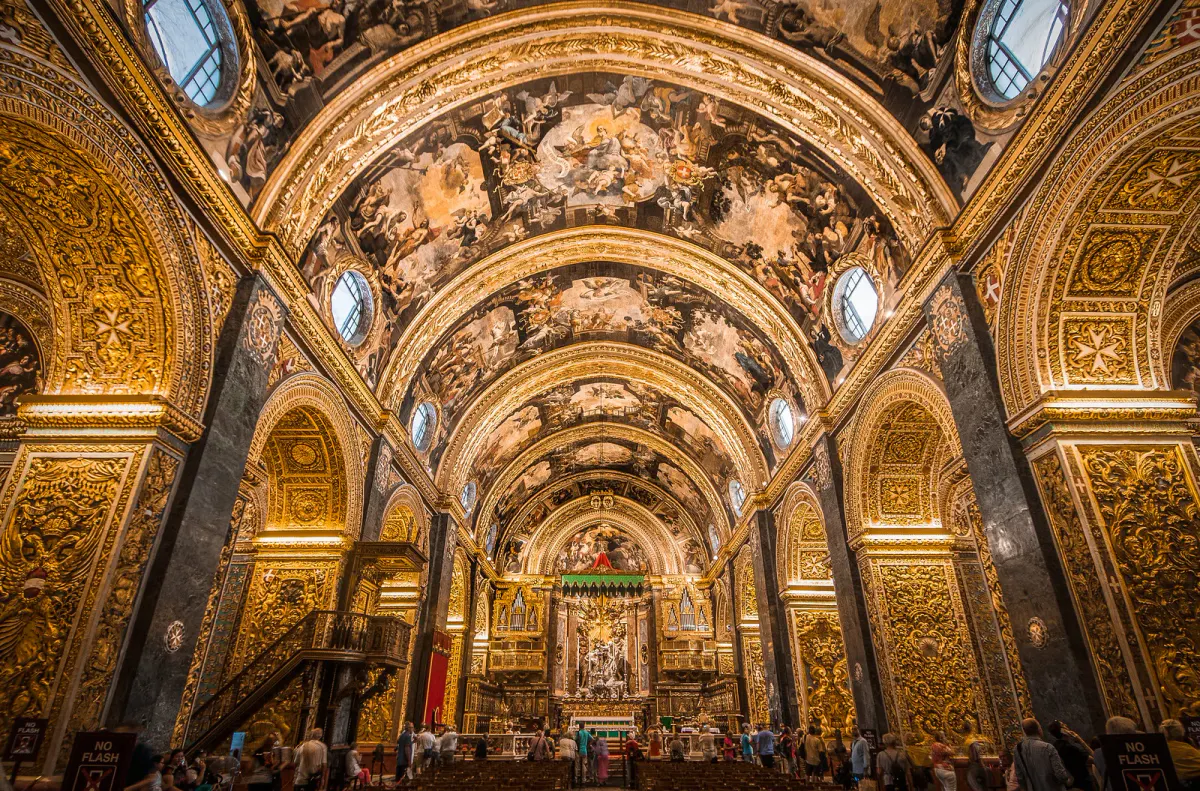
There are three UNESCO sites in Malta declared World Heritage Sites: Valletta, the Megalithic Temples of Malta and the Ħal Saflieni Hypogeum.
If you want to organise a visit and understand how to book the Hypogeum, what are the times, how much they cost tickets and which temples are really worth visiting, continue reading this guide.
If you have decided to attend a English course in Malta, or you are simply thinking of visiting the island, know one thing: it is really difficult to get bored here.
Sea, sun, landscapes, evenings with friends... of course. But Malta is also history, art, architecture and prehistory. In some moments it almost feels like walking inside an open-air museum.
What are the UNESCO sites in Malta?
Despite its very small size, they exist three UNESCO sites in Malta inscribed in the "World Heritage List":
- the city of Valletta;
- i Megalithic Temples of Malta;
- theĦal Saflieni Hypogeum.
When we talk about “3 UNESCO sites” it does not necessarily mean three individual places. I Megalithic Temples, for example, constitute a single UNESCO asset made up of several archaeological complexes distributed between Malta and Gozo.
Let's see them one by one.
- Valletta, the city of Knights
Valletta has been a UNESCO World Heritage Site since 1980 and it is one of those cities that manage to surprise you at every corner.
Think about that within just Around 320 monuments are concentrated within 0.8 km.
Valletta, on the island of Malta, is the smallest European capital. A little gem waiting to be discovered.
Accessed on foot you enter through the new City Gate designed, together with the neighbor Parliament and the theater which can be found just after crossing the moat at the entrance to the city, all designed by the famous architect Renzo Piano who is responsible for the project.
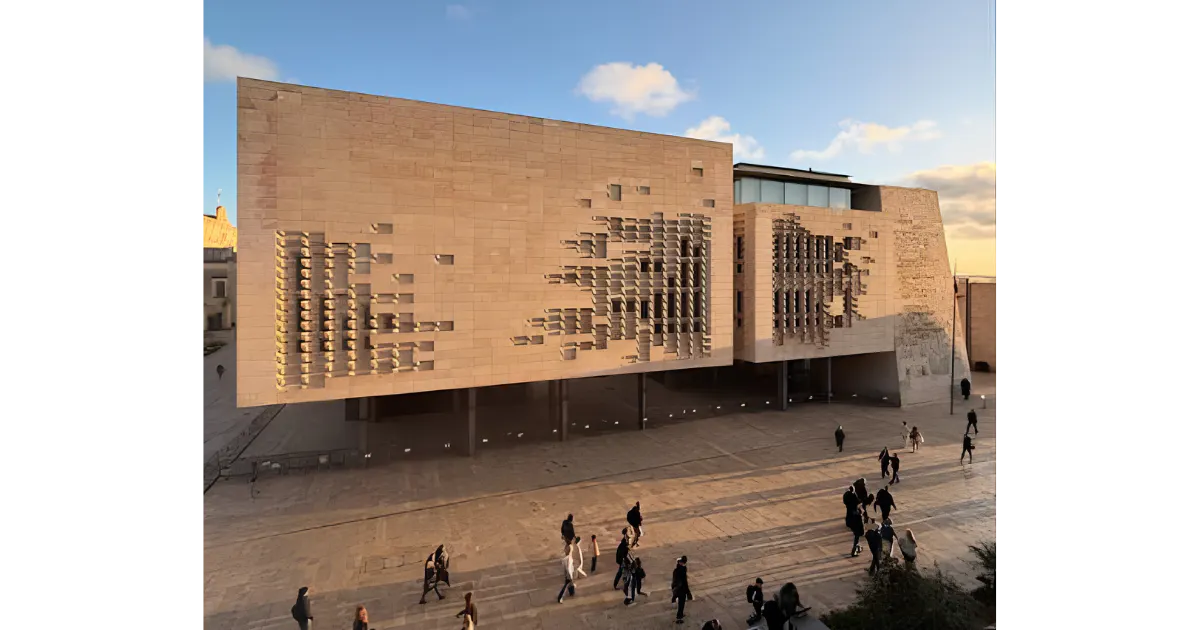
It is a modern reinterpretation of a part of the city that blends without contrast with the older baroque buildings of which the city is rich.
Valletta was born after the Great Siege of Malta and its foundation dates back to 1566, when i Knights of the Order of St. John began to build their new walled city.
In fact, UNESCO considers it one of the historical areas with the highest concentration of monuments in the world.
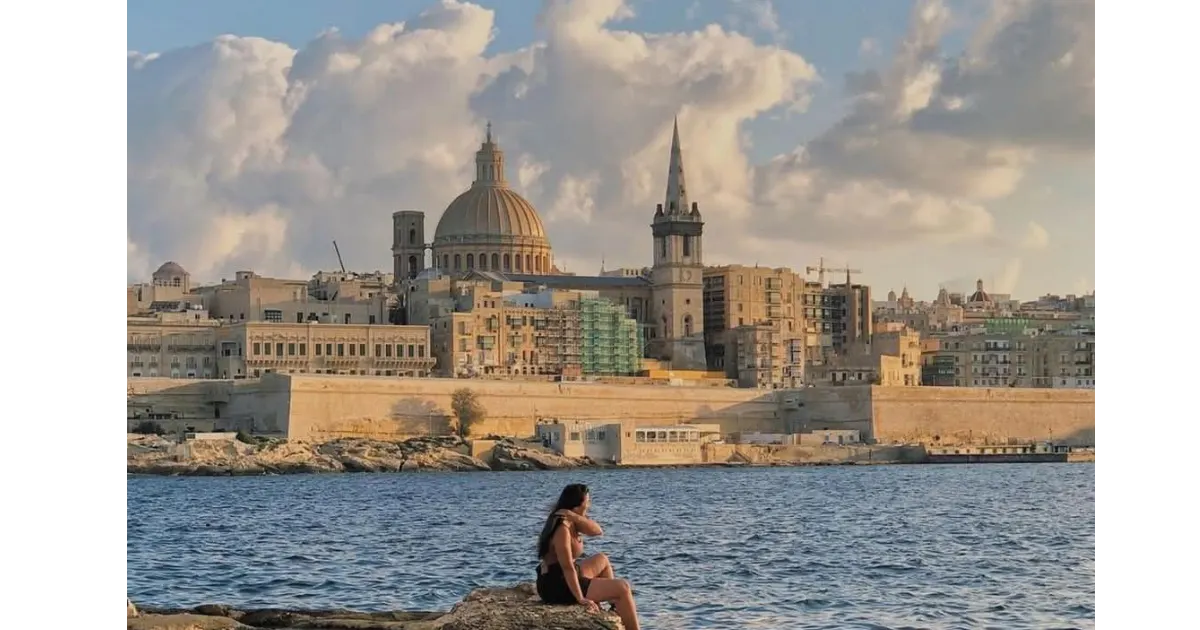
All this in a city that you can easily walk through. But what is really worth seeing?
The Co-Cathedral of San Giovanni
If it seems relatively austere from the outside, wait until you enter.
The St. John's Co-Cathedral it is one of the places that I recommend not to skip during a visit to Valletta.
Inside there are also two works by Caravaggio: Saint Jerome writing and The Beheading of Saint John the Baptist.

The Beheading of Saint John the Baptist is not just a Caravaggio: it is the largest canvas created by the artist and is the only known work on which he placed his signature. If you love art, this is already worth the visit.
How much does it cost and what are the opening hours of St. John's Co-Cathedral?
The Co-Cathedral of San Giovanni and its museum can be visited from Monday to Saturday, Sundays and public holidays are closed, from 09:00 to 16:45.
The entrance ticket costs €15 for adults, €12 for students and over 60s, while they are free for children under 12. Portable audio guide is included for all tickets and is available in 11 languages.
Are you trying to improve your English? Check out ours English courses in Malta.
The Grand Master's Palace
In a few minutes you will find the Palace of the Grand Master, one of the buildings symbolizing the power of the Knights and today home to the Office of the President of Malta.
Among its particularities are the spectacular tapestries commissioned at the beginning of the eighteenth century.
Small updated curiosity: after almost two years of restoration in Belgium, the historic tapestries are returned to Malta in June 2026 and were relocated to the Palace.
How much does it cost and what are the opening hours of the Grand Master's Palace?
The Grand Master's Palace in Valletta, generally open daily from 09:00 to 18:00.
With the ticket it is also possible to visit the State Rooms and the Armory for a fee €12 for adults, €10 for young people aged 12 to 17 and seniors over 60, €8 for children aged 6 to 11, while it is free for children aged 0 to 5.
Fort St. Elmo and National War Museum
At the end of the peninsula you will find instead Fort St Elmo, one of the strategic points of Maltese military history.
Its position allowed it to control access to the two ports surrounding Valletta and today the fort houses the National War Museum.
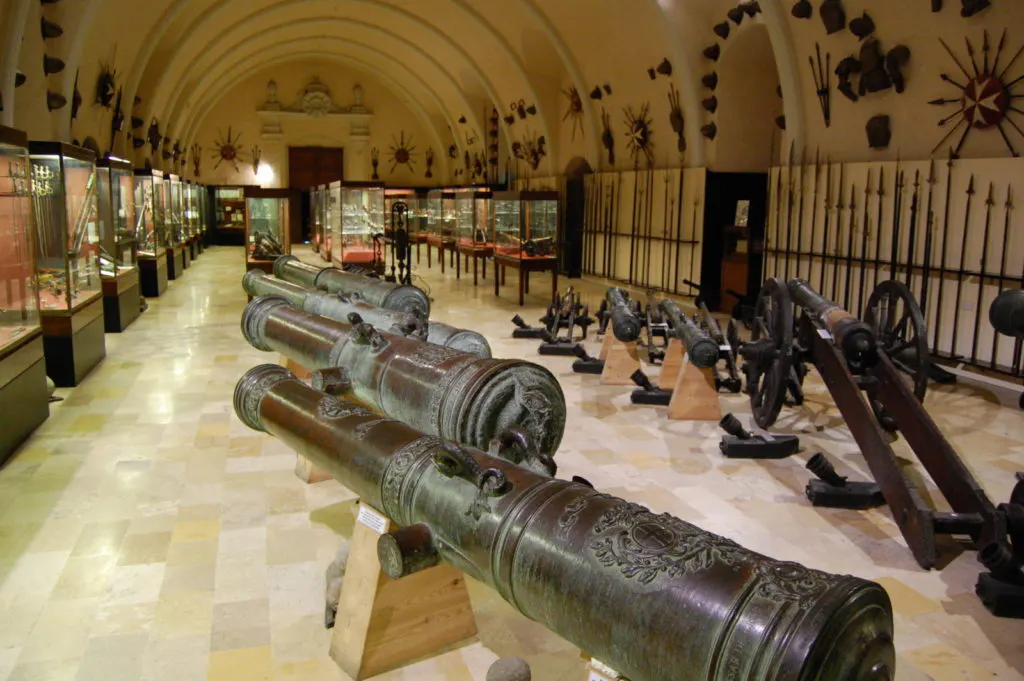
Initially, only a simple medieval watchtower stood on the promontory to control maritime traffic and prevent pirate incursions
When i Knights of Malta they took control of Malta, they decided to fortify the area by building a real star-shaped fort
During British rule, the fort was heavily modified and modernized with the addition of new barracks, offices and coastal observation towers, being actively used even during the Second World War to defend the port from Axis air raids.
How much does it cost and what are the opening hours of Fort St. Elmo and the National War Museum?
Fort Sant'Elmo the National War Museum is open every day continuously from 09:00 to 19:00, it is accessible with tickets costing between €10 for adults, €8 for students and seniors (aged 60 and over), €5.50 for children aged 6 to 11, while entry is free for children under 6.
Personally, I wouldn't try to see everything while running in Valletta.
Enter the side streets, see the famous Maltese balconies, stop at the Upper Barrakka Gardens and overlook the Grand Harbour.
It is precisely by walking without too much haste that you understand why the entire city has entered the UNESCO list.
- The megalithic temples, the prestoria in the heart of the Mediterranean
This is probably the part that surprises those who arrive on the island for the first time the most.
In Malta and Gozo there are prehistoric constructions built more than 5,000 years ago.
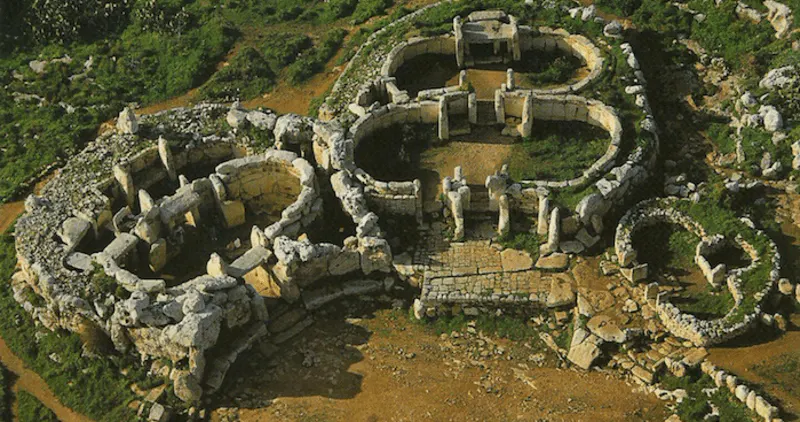
I Megalithic Temples of Malta they are considered by UNESCO to be among the oldest self-supporting monumental stone buildings in the world.
The UNESCO asset includes:
- Ġgantija, in Gozo;
- Ħaġar Qim;
- Mnajdra;
- Tarxien;
- Skorba;
- Ta’ Ħaġrat.
UNESCO talks about seven temples and some really are older than the Pyramids. For example, structures from Ħaġar Qim date back to around 3600–3200 BC, while the Maltese megalithic complexes belong to the 4th and 3rd millennium BC.
In other words: while much of Europe was still very far from the great monumental civilizations we know, someone in Malta was already moving huge blocks of stone.
How much do they cost and what are the opening hours of the Megalithic Temples of Malta?
The Megalithic Temples of Malta are open every day from 09:00 to 17:00.
The cost of tickets varies depending on the site: €6 in Ta’ Ħaġrat, Skorba or Tarxien, while €12 to visit Ħaġar Qim, Mnajdra and Ġgantija.
If you want to have a single ticket to visit multiple sites you can purchase the cumulative Multi-Site Pass for around €50, providing discounts for students, seniors and children and free entry for children under 5 years old.
Getting to Malta from Italy: flights, the airport and practical advice
- Ħal Saflieni Hypogeum: the hidden treasure under Malta
TheĦal Saflieni Hypogeum, located at Paola, is probably gods UNESCO sites in Malta more incredible.
From the outside you are in a normal urban area. Under your feet, however, lies an enormous prehistoric complex dug directly into the rock.
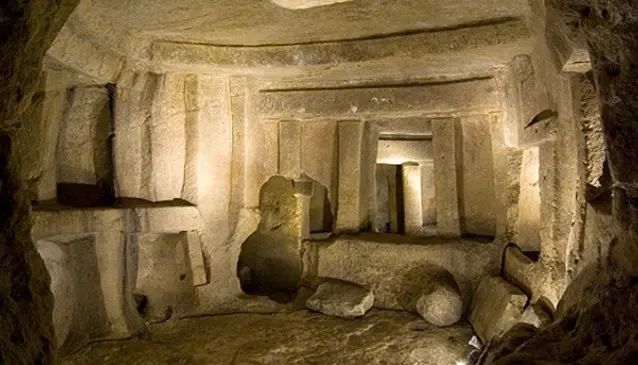
The Hypogeum is made up of rooms, corridors and environments distributed on three levels and was used by prehistoric Maltese communities for funerary and ritual purposes. UNESCO estimates that the remains of approximately 7,000 individuals.
It was discovered practically by accident
Another incredible story: the Hypogeum was discovered in 1902during construction works.
A bricklayer was digging to build the foundations of some houses when the underground complex was intercepted.
They were practically building houses on top of one of the most important prehistoric monuments in the Mediterranean.
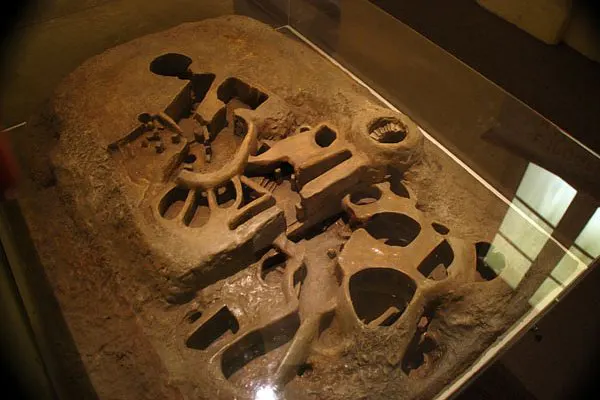
Inside the hypogeum there is also a model, which allows you to see very well how complex the complex is, with rooms, corridors and cavities dug into the rock and distributed over several levels.
Are you a teacher and want to use your Carta del Docente for a study trip to Malta? Discover ours all inclusive packages.
The Oracle Room
Among the most famous environments there is the so-called Oracle Room, the Oracle Room.
A niche in the room has particular acoustic properties: the voice can resonate within the environment creating a decidedly suggestive effect.
And the famous one was also found in the rooms of the Hypogeum Sleeping Lady, a small figurine depicting a reclining female figure.
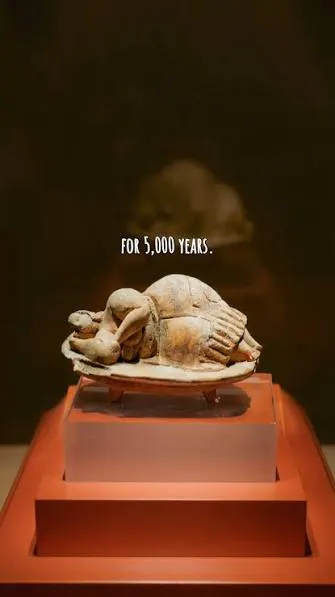
The original is today preserved at National Museum of Archeology in Valletta.
One important thing: book in advance
For conservation reasons, access is heavily controlled and Heritage Malta explicitly recommends booking well in advance as places can run out.
Furthermore, within the site photography or filming is not permitted.
For once, therefore, no Stories. You'll just have to enjoy it.
3 unusual places to visit in Malta away from the crowds
Tickets for the Hypogeum: how to book the most difficult ticket among the UNESCO sites in Malta?
Booking a ticket to the Hal Saflieni Hypogeum can be quite complicated as there are only a certain amount of tickets available per day to ensure a safe experience and the site being properly preserved.
So we recommend book at least a month in advance, is open every day with guided tours from 09:00 to 16:00
Tickets cost €35 for adults, €20 for children aged 12 to 17, seniors aged 60 and over, and €15 for children aged 6 to 11, while children under 6 are not admitted.
Is the Hypogeum worth €35?
For anyone interested in the prehistory, archeology or ancient history of Malta, yes without reservations. The Hypogeum is among the most significant and evocative UNESCO sites in Europe.
Studying English in Malta also means experiencing the island
A study trip to Malta it's not just about English lessons. The beauty of it is being able to use the rest of the day to discover an island which, despite its size, contains an incredible amount of history, culture and places to visit.
If you are thinking of coming to Malta to improve your English, you can discover ours language stays in Malta and request a free quote Maltaforenglish.
And then, once you arrive, promise me at least one thing: between a beach and an aperitif, give yourself a few hours to discover this Malta too.
Have you just finished school and don't know what to do? Take a look at What to do after finishing school: how studying English abroad can change your life
Why rely on Maltaforenglish to leave for Malta?
Since 2014 Maltaforenglish organises study holidays and language stays in Malta for students, families and adults.
Thanks to the presence in the area, the experience gained with approximately 15,000 students left with us and the possibility of customizing each project, Maltaforenglish guarantees in every trip safety and tranquility.
If you are thinking of studying English abroad and want to understand which solution is best for you, contact us up WhatsApp, do a free quote or follow us on ours social.