
Have you ever wondered because English is spoken in Malta? This island in the heart of the Mediterranean has two official languages: Maltese and English.
And the good news, if you are planning a trip, is that English is known by a large part of the population, almost 96% of Maltese between the ages of 15 and 64 understand English. But they are not, Malta is also famous for its numerous accredited English schools.
But why has a small island less than 100 kilometers from Sicily become one of the best-known European destinations for study English abroad?
The answer is linked to its British history, but also to the advantages of a study trip to Malta: English courses, Mediterranean climate, around 300 days of sunshine a year and a spectacular sea.
Why is English spoken in Malta? A little history
To understand why English is spoken in Malta we must go back more than two centuries.
In reality, before the arrival of the British, Malta already had a very particular linguistic history.
Over the centuries the island had undergone the influence of various Mediterranean civilizations. Maltese had developed as a language spoken by the population, while Sicilian and later Italian had acquired an important role in culture and administration.
With the arrival of Knights of St. John in 1530, Italian became particularly widespread in official communications and in the environments of the educated classes.
The arrival of the English in 1800
In 1798 Napoleon Bonaparte occupied Malta, beginning a brief period of French domination.
The Maltese, however, rebelled and, with British support, managed to achieve the expulsion of the French in 1800.
From that moment the British presence on the island, formalized in 1814, when Malta became a British possession under the Treaty of Paris.
The English progressively influenced institutions, education, trade and of course the language.
English became increasingly important, until it was recognized as an official language together with Maltese in 1934, while Italian lost its previous official role.
When did Malta become independent?
Malta gained independence from the United Kingdom on September 21, 1964, which is still celebrated every year on September 21st, if you happen to be here on this day don't miss the celebrations.
In 1974 it became a Republic and in 1979 the presence of British military forces on the island definitively ended.
But English did not disappear because it was now deeply rooted in the education, administration and economic life of the country. And this is how Malta became the bilingual reality we know today.
And this is how Malta became the bilingual reality we know today, so much so that currently there are many English schools, and if you want advice on which one to choose, this article may be right for you: Choosing an English school in Malta: 10 things to check before booking
Do they speak Italian in Malta?
Yes, many Maltese speak or understand Italian, but only the older generations.
One of the most curious reasons is linked to television. In the 1950s Malta did not yet have its own television station and, thanks to its proximity to Sicily, the inhabitants began to receive the programmes of Italian Rai. The first local television only arrived in 1962.
For decades the Maltese have grown up watching Italian programmes, films and programmes, first on Rai and later also on the Mediaset networks. And so, almost without realizing it, many have learned to understand and speak Italian simply by watching TV.
What language is Maltese?
The Maltese language is nothing like English! It is a language of Semitic origin, developed from Sicilian-Arabic and enriched over the centuries with many words coming from Sicilian, Italian and English.
For this reason, listening to a conversation between Maltese, you may recognize some Italian words alternating with sounds reminiscent of Arabic.
3 curiosities about the English influence in Malta
The British heritage is not only recognized by the language. There are small details of daily life that still tell the story of the island's past today.
- In Malta you drive on the left

If you have already visited Malta, you will probably have noticed this as soon as you got into a taxi or bus.
In Malta you drive on the left, just like in the UK!
It is one of the most obvious legacies of the British period and one of the first things that tourists who decide to rent a car have to get used to.
- The red telephone booths still exist
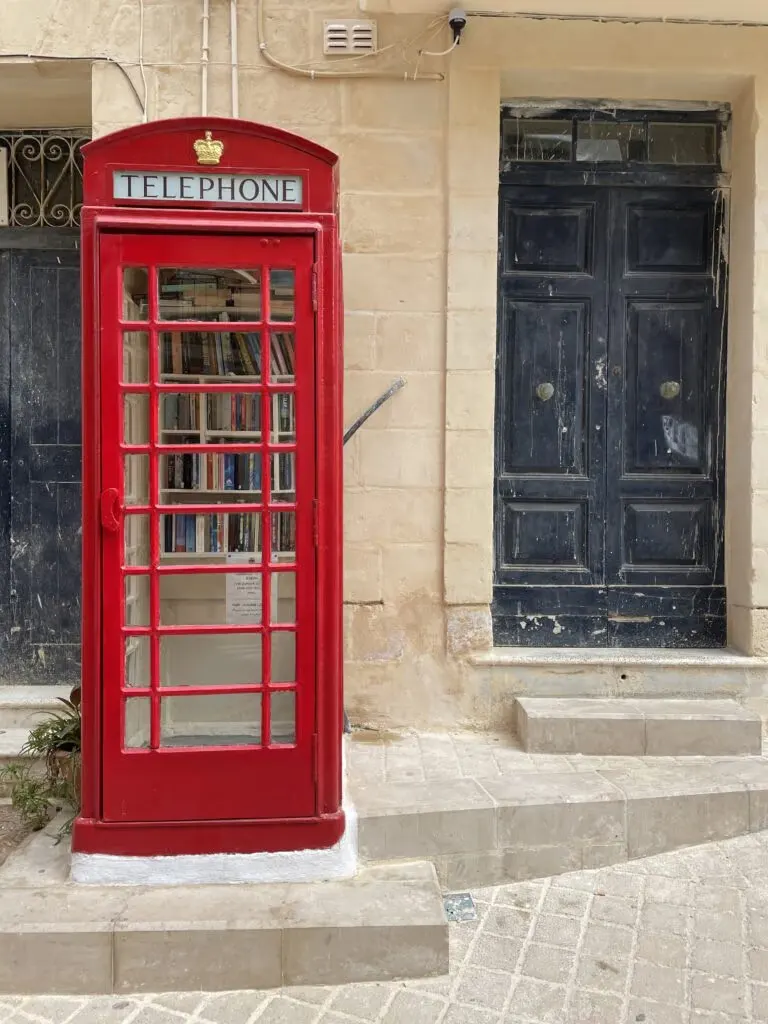
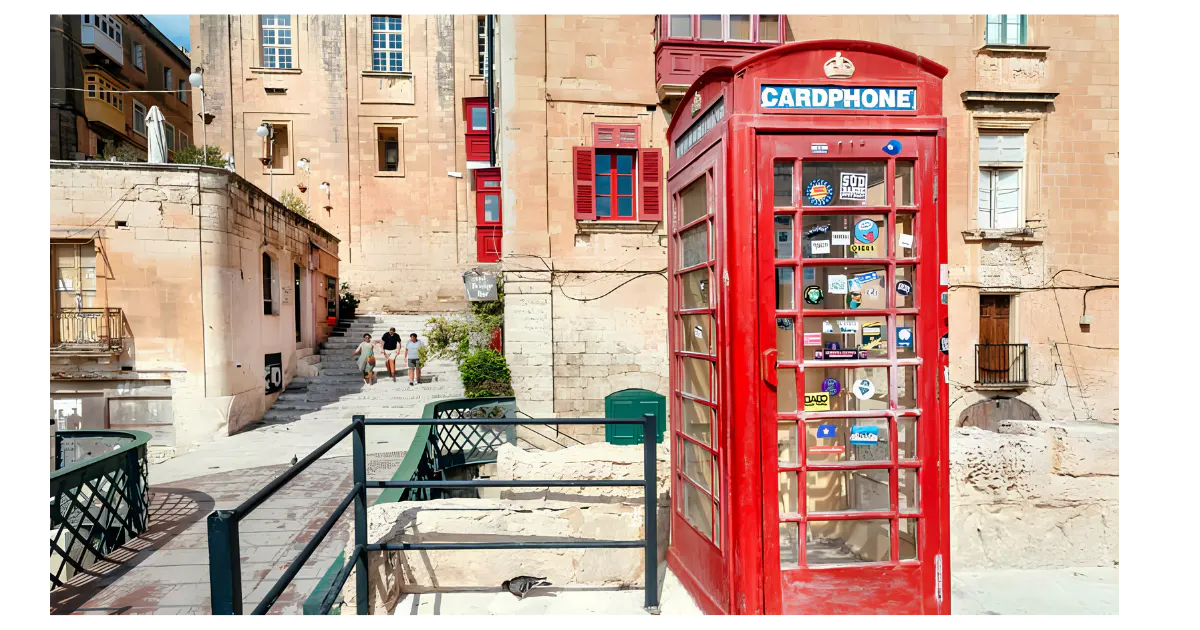
Walking around Valletta or Sliema, or other ancient cities, you may come across the features British style red telephone booths.
Some look like they came straight from a London street, with one difference: here they are surrounded by limestone buildings and lit by the Mediterranean sun!
Even some red post boxes are reminiscent of the British period.
They are small details that make the Maltese urban landscape even more special.
- The electrical sockets are like the English ones
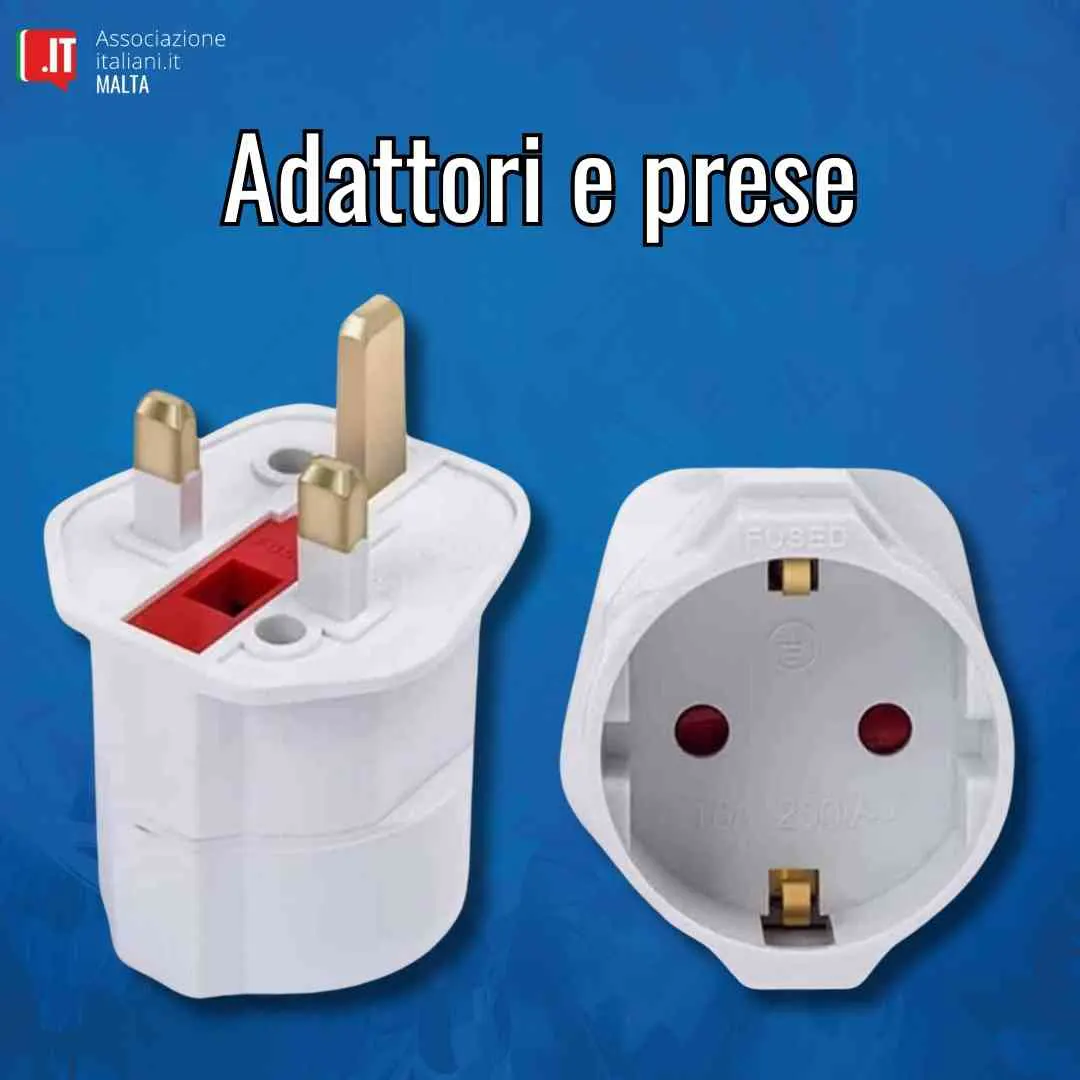
If you're coming from Italy and try to plug in your phone charger, you might be in for a surprise.
In Malta they are used type G electrical sockets, with three rectangular poles, just like in the UK.
So, before leaving, remember to pack an adapter!If yes
Why is Malta one of the most popular destinations for studying English?
At this point you might ask yourself: if English is also spoken in the United Kingdom or Ireland, why choose Malta for a language study trip?
The answer isn't just about language.
Malta allows you to combine the study of English with a Mediterranean climate, an international environment and numerous opportunities to practice the language outside the classroom.
And the numbers confirm how well the island is known for study trips.
According to the National Statistics Office of Malta, in 2025 beyond 76,000 foreign students attended English courses in the 34 authorised schools of the archipelago.
If you're still undecided, listen to one of ours testimonials.
Can you learn English outside of school too?
Absolutely yes, you can learn English even outside of school. Indeed, it is one of the most interesting aspects of a study trip.
Imagine a day in Malta: in the morning you attend an English course, in the afternoon you visit Valletta with some international classmates and in the evening you attend an event or meet new friends.
In all these situations you can practice your communication in a foreign language.
Because studying a language is important, but using it in everyday conversations is what helps you become more confident.
Do you want to discover some activities to do after class? Read our article on 7 things to do in Malta to truly experience the island.
Do you want to improve your English in Malta?
Now you know why English is spoken in Malta and how British history has contributed to making the island an international destination for language learning.
But the beauty of a study trip to Malta is precisely this: you don't have to choose between learning English and having a great experience abroad. You can do both!
We at Maltaforenglish organise language stays for children, adults, schools and teachers, combining English courses, accommodation and activities based on different needs.
Do you want to find out which language study trip is right for you?
Discover ours English courses in Malta or contact us to receive a personalised quote.
Why rely on Maltaforenglish to leave for Malta?
Since 2014 Maltaforenglish organises study holidays and language stays in Malta for students, families and adults.
Thanks to the presence in the area, the experience gained with approximately 15,000 students left with us and the possibility of customizing each project, Maltaforenglish guarantees in every trip safety and tranquility.
If you are thinking of studying English abroad and want to understand which solution is best for you, contact us up WhatsApp, do a free quote or follow us on ours social.