
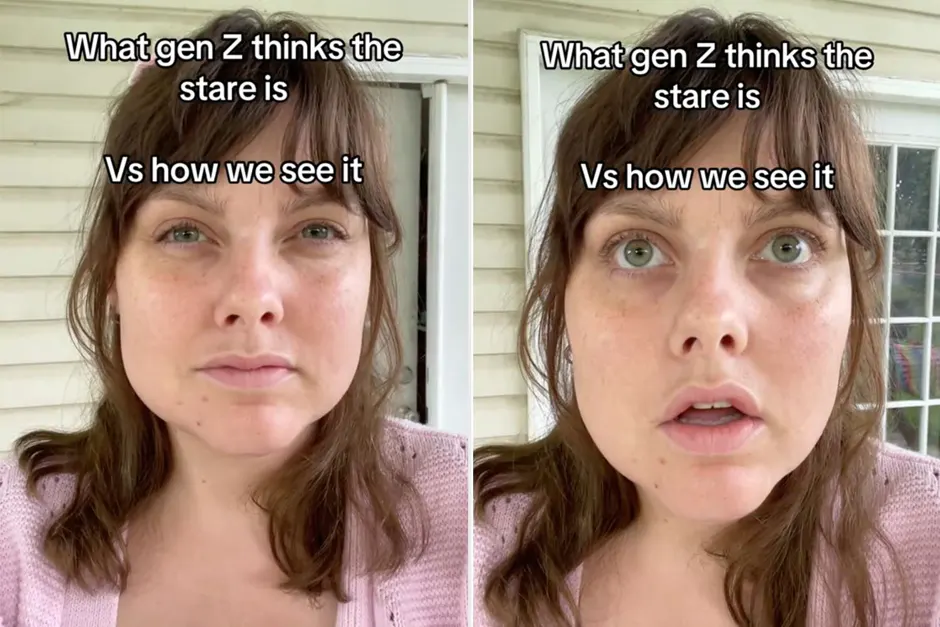
According to the research, we talk less and less. It's not just a feeling linked to social media, smartphones or shyness: several researchers are starting to carefully observe how it is changing the way we communicate out loud and the consequences what this is having on our brains.
This phenomenon was triggered by the advent of technology, but it is not irreversible. In this article we explain how this problem arose and how to solve it.
Are we talking less and less?
According to an analysis published in "Perspectives on Psychological Science", between 2005 and 2019 people spoke fewer and fewer words per day on average.
The study analyzed data from 2,197 people aged 10 to 94.
The most striking finding is an estimated average reduction of 338 fewer words spoken per day for each year between 2005 and 2019. It may seem like little, but over time it becomes a lot.
The research speaks of a drop of approximately 28% in the number of words spoken daily.
The decline in spoken language seems to be particularly evident among younger people, especially under 25 years old.
But also the people over 25 are at risk. They are always there less from conversations between close friends and family and more by the disappearance of shorter, occasional exchanges, mostly with strangers.
Every innovation eliminates an interaction
Every innovation eliminates an interaction that once would have required talking to another person. You can order a hamburger from a kiosk. Google can provide driving directions. ChatGPT can help resolve debates over facts like who the actor was in a particular movie.
Because if we talk less, we're not just using fewer words. We are also training less a key part of the our social life: the ability to start a conversation, sustain it, respond, listen, improvise, manage discomfort and express your opinion.
The meeting places have been lost such as clubs, churches, neighbourhood associations and other forms of community participation in the 1960s, shortly after the advent of television, but decades before the arrival of smartphones. Digital life it could be accelerating a process already underway.
Calvin Newport, professor at Georgetown University who writes about the impact of technology on society, said he believes people talk less because in-person or voice interactions can be difficult.
"So, when we simplify socialization, paradoxically we feel less connected and sociable,” Newport said.
Are small conversations really necessary?
Yes, small conversations are useful because they are a social gym.
A chat with a stranger won't change anyone's life. But it can help you feel looser, more present, more capable of managing new situations.
Talking to someone you don't know forces you to do many things at the same time:
- choose words;
- interpret the other person's tone;
- really listen;
- respond in real time;
- manage silence;
- accept that you don't have everything under control.
It's very different from writing a message, deleting it, rewriting it, and only sending it when it feels perfect.
What does the pandemic have to do with us talking less and less?
Generation Z appears to have been particularly hard hit, leading to speculation that the pandemic may be partly responsible: many young they have missed crucial years of socialization in person, attending school virtually during the lockdowns due to Covid-19.
This doesn't mean that Generation Z is "less capable" than others. It means that he lived very particular years, in which some social skills they trained less.
And like all skills, if you don't use them, they become more tiring.
How to overcome anxiety about studying abroad?
Little tricks to train your language
To get back to practicing conversation, you don't need to change your life: just start again with small daily interactions.
You can start like this:
- ask a question instead of looking everything up online;
- order without reading from your phone;
- call instead of always texting;
- talk to a classmate you don't know;
- try talking about your day out loud;
- while travelling, ask passers-by for directions.
Even in your daily life think "the hardest way" to interact, even a chat with the taxi driver, or an exchange of pleasantries about the weather with the cashier at the supermarket may not be particularly meaningful conversations, but I can be a opportunity to practice social and cognitive skills.
How a language study trip changes you: 3 benefits you can notice straight away
Can the study trip help you talk more?
A study trip can help you talk more about why it puts you in real situations, where communicating is not a theoretical exercise but a daily necessity.
During a study trip to Malta, for example, you don't just use English in class. You use it to order a coffee, ask for information, meet other students, talk to roommates, orient yourself, participate in activities and solve small everyday problems.
Do you want to know more about how a study trip to Malta works?
Talk about it with Francesca on WhatsApp
Don't worry: you don't have to call her, she also responds on WhatsApp 😂
Why is Malta a perfect training ground for language training?
Malta is a perfect training ground for Generation Z because it combines English, international life and daily social situations in a context that is easier to deal with than a large metropolis.
The island is close to Italy, has an international environment, welcomes students from many countries and allows you to experience English in a concrete way. Not just grammar, not just exercises, not just theory.
In Malta you find yourself talking to people who have different accents, different cultures and different ways of communicating. This can be scary at first, but it is also what makes the experience so educational.
What level of English do you need for a study trip to Malta?
Why rely on Maltaforenglish to leave for Malta?
Since 2014 Maltaforenglish organises study holidays and language stays in Malta for students, families and adults.
Thanks to the presence in the area, the experience gained with approximately 15,000 students left with us and the possibility of customizing each project, Maltaforenglish guarantees in every trip safety and tranquility.
If you are thinking of studying English abroad and want to understand which solution is best for you, contact us up WhatsApp, do a free quote or follow us on ours social.