

There are many Italian expressions that are difficult to translate into English, not because it is impossible to express their meaning, but because they often contain nuances, emotions and cultural references that a simple literal translation cannot convey.
In Italy we have words and sayings that we use continuously, almost without thinking about it, but which can become very difficult to explain to a foreign person.
What are the Italian expressions that are difficult to translate into English?
Portuguese has “saudade”, a feeling of nostalgia and melancholy linked to something or someone we miss.
In Japanese it exists “komorebi”, which describes sunlight filtering through tree leaves.
And us Italians? We have the“I'm having fun”, that sudden drowsiness that comes after a hearty lunch, but also many other words that perfectly describe our way of being.
We collected 9 Italian expressions that are difficult to translate into English, with their meaning, some curiosities about the origins and the most natural translations.
- Abbiocco
You know that sudden drowsiness that comes after a big lunch, when the only thing you want to do is lie down on the sofa?
In Italian we have a perfect word: I'm hooked.

The term abbioccarsi derives from "biocca", a dialectal word in Roman meaning "hen", or the brooding hen. So “fall asleep" it literally described the attitude of the hen that curls up and stays still to sit on her eggs. Or what we all do after Sunday lunch.
Abbiocco: meaning and translation into English
- Food coma: drowsiness after a large meal.
- I'm feeling sleepy: I'm getting sleepy.
Example: I'm in a food coma! (What a joke!)
- I love you
Let's start with one of the most beautiful and difficult to translate Italian expressions: “I love you”.
In Italian we can say it to a friend, a parent, a sibling or a person we are particularly close to.
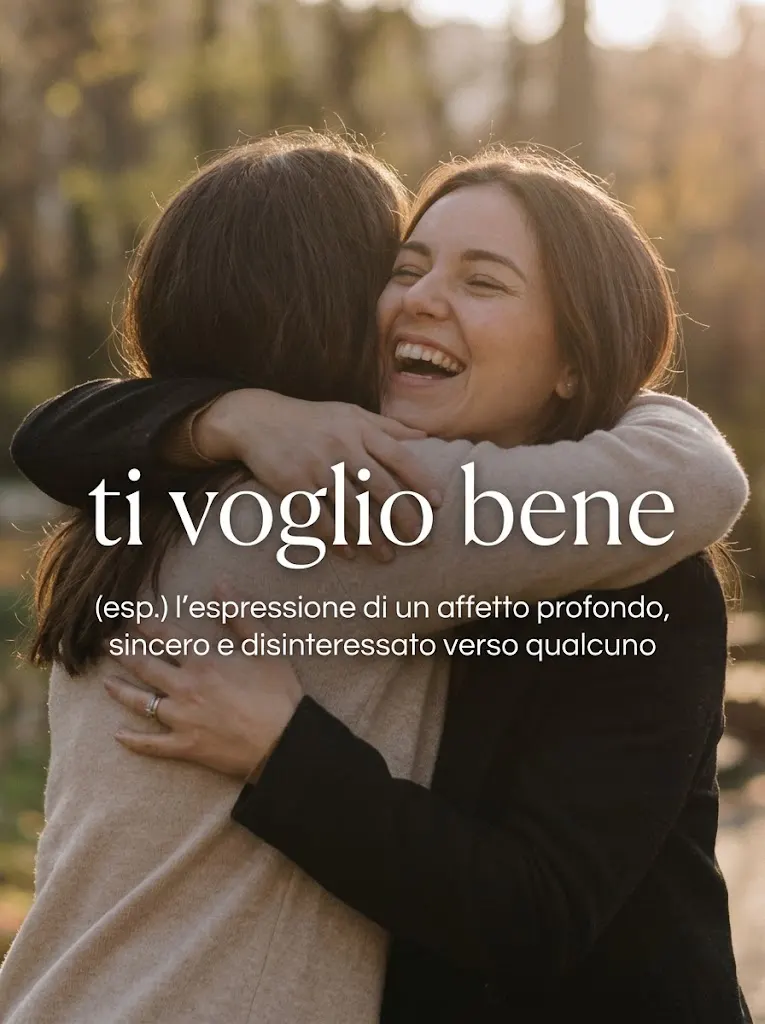
How do you say "I love you" in English?
- I love you – I love you, but I also love you, especially among family and close friends.
- I like you: I like you
- I care about you – I care about you.
- You mean a lot to me – You are very important to me.
Example: You mean a lot to me! (You really mean a lot to me!)
The difference is that in Italian we often distinguish between "I love you" and "I love you", while in English "I love you" can express both forms of affection, depending on the relationship.
- Throwing the package/running the bin/putting a hole in
You've organised an outing with a friend, you're ready and five minutes before you receive a message: “Sorry, I'm not coming anymore”.
In Italian we have many sayings to describe those who give up on an outing at the last moment. And even if we are a very sociable people, sometimes laziness suddenly takes over and then... let's get the package!
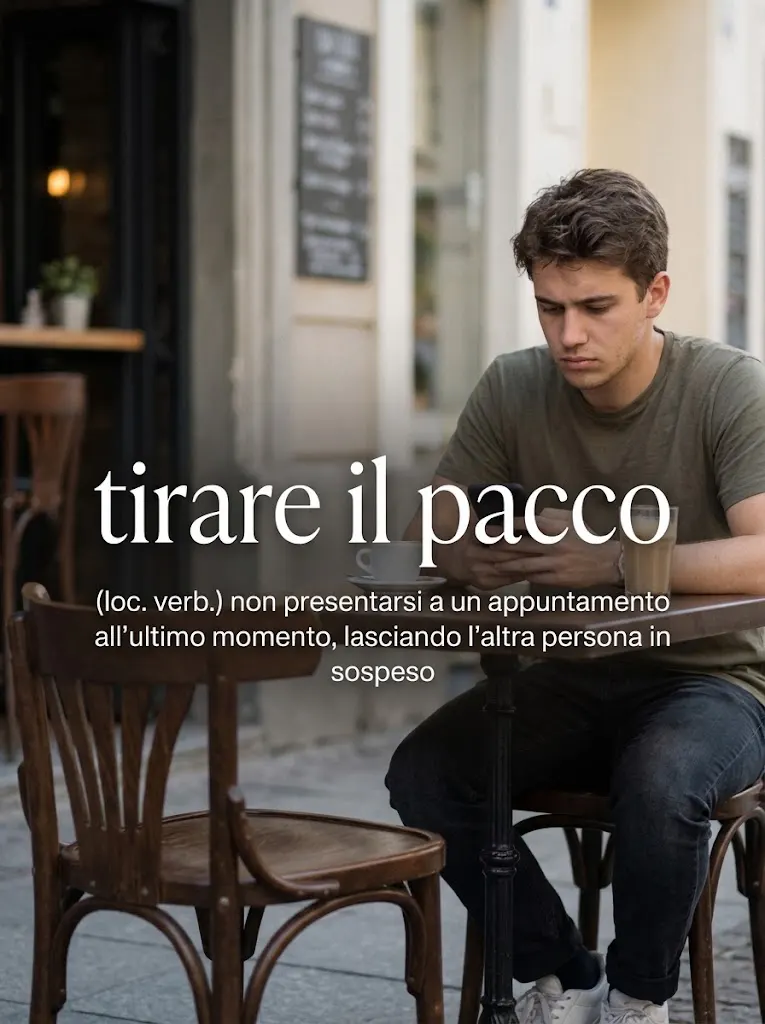
The origin of “pull the package”
A popular explanation links it to old street scams: someone would sell a package apparently containing valuable goods, but inside were worthless items, such as paper or bricks.
What does "doing the trash" mean?
The expression "to make a bin" or "to throw the bin" comes from the French "bin”, or bucket. The word spreads in the Bolognese area with the metaphorical meaning of scam or scam, probably linked to scams with empty or fake containers.
Where does “put up” come from?
The word hole indicates a cavity, a void in the ground. Figuratively speaking, to stand up means to leave someone without the meeting or commitment they expected.
There is no established etymological origin for the entire expression. The idea of the void left by someone is an intuitive explanation,
Pull the parcel: how do you say it in English?
- To bail on someone – Standing up to someone.
- To flake on someone – Throwing the package to someone, often at the last moment.
Example: Maria bailed on me! (Maria stood me up!)
And if you're on a study trip to Malta, let's hope your new friends don't get in your way just when you've organised something fun! By the way, we collected 7 things to do in Malta after lessons, including events, new friendships and experiences to practice your English outside of school.
- Thank goodness
The expression "lucky" (or "thank goodness") literally means "less of the harm (that could have happened)". It was born as a way to express relief and gratitude for having avoided a worse problem or a bigger catastrophe.
How many times do we say it during a day?

When we discover that we haven't lost our phone, when our flight isn't delayed or when someone tells us good news.
How do you say "thank goodness" in English?
- Thank goodness! / Thank god – Thank goodness!
- What a relief! – What a relief!
- Fortunately / Thankfully – Luckily.
Example: I passed the test, thank god! (I passed the exam, thank goodness!)
- Damn!
Did you miss the bus by a few seconds? Have you forgotten your keys at home? Did you just realize you left your phone at the restaurant?
In Italian, one word is enough to express all our frustration: “Damn!”.
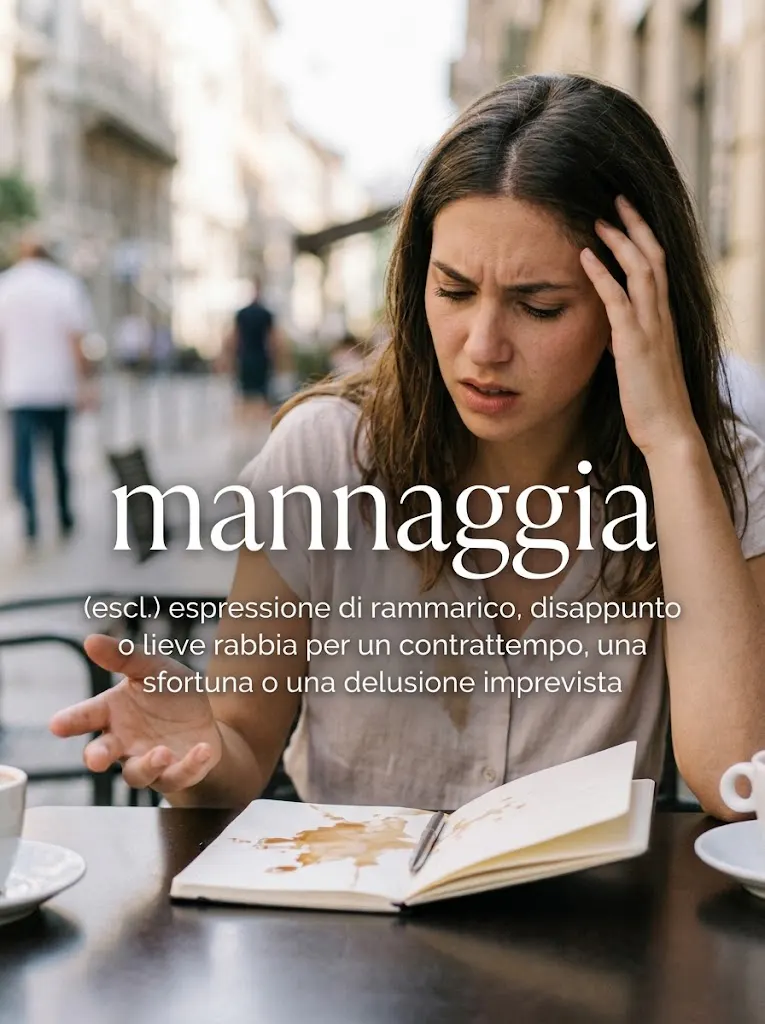
But do you know where this expression comes from?
According to the Accademia della Crusca, there are two possible origins: the first connects it to the southern expression “it doesn't matter”, where aggia is the ancient subjunctive of "abbia".
While the second derives from “evil”, which literally meant “have an ailment”.
It was therefore originally a curse, a sort of wish for misfortune. Today, however, we use it above all to express annoyance, anger or even affection.
It is not uncommon to hear, especially in Southern Italy, a “Damn you!” uttered with a smile, like a small affectionate reprimand.
Damn: English translation
- Darn it! – Damn!
- Shoot! – Damn!
- Damn it! – Damn it! (louder and less polite).
Example: Darn it! I missed the bus! –(Damn! I missed the bus!)
- Eye (attention)
In Italian, just shout “Watch out!” to warn someone of danger, get their attention or tell them to be careful.
The exclamation "Look out!" used to say "Attention!" or to warn someone derives from a very simple and instinctive linguistic and cultural mechanism using a word to indicate an action.
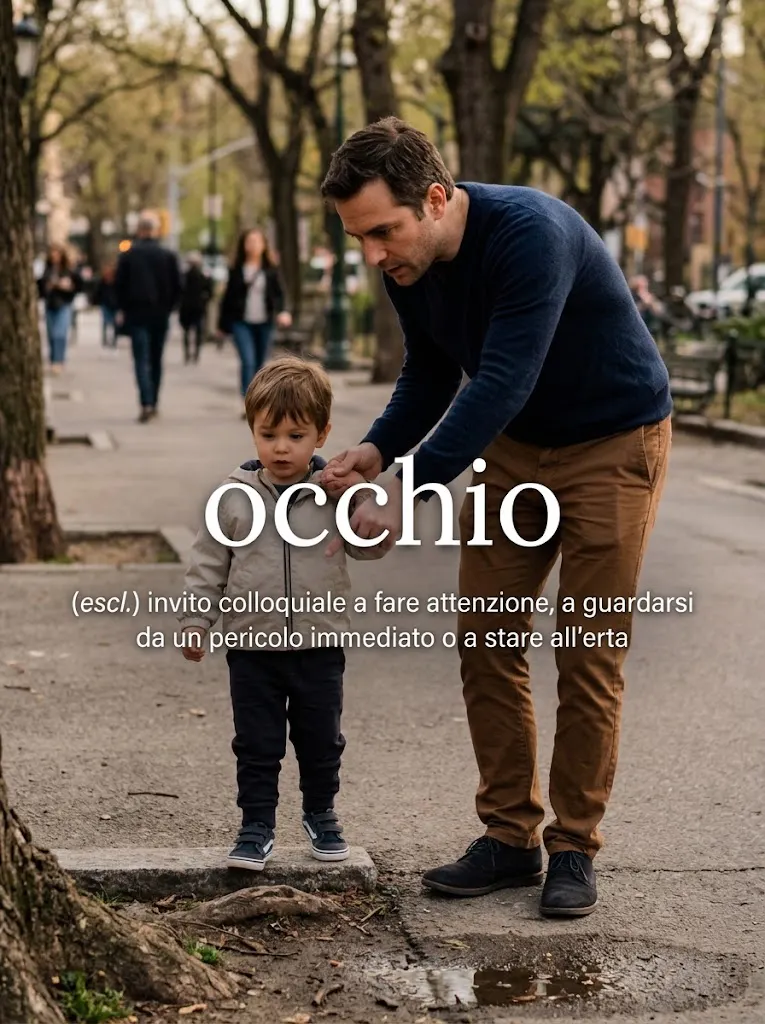
As they say "watch out!" in English?
- Watch out! – Watch out!
- Be careful! – Be careful!
- Heads up! – Watch out! / I warn you!
Example: There is a step, watch out! (There's a step, watch out!)
- Oh God
“Dunno”, three letters often accompanied by a shrug that simply mean “I don't know.” It is one of the most Italian expressions that exist.
But Is “boh” really a word? Yes! Although it seems more like a sound than a word, it is recognized by Italian dictionaries as interjection, that is, an exclamation that can express uncertainty, doubt or disbelief.
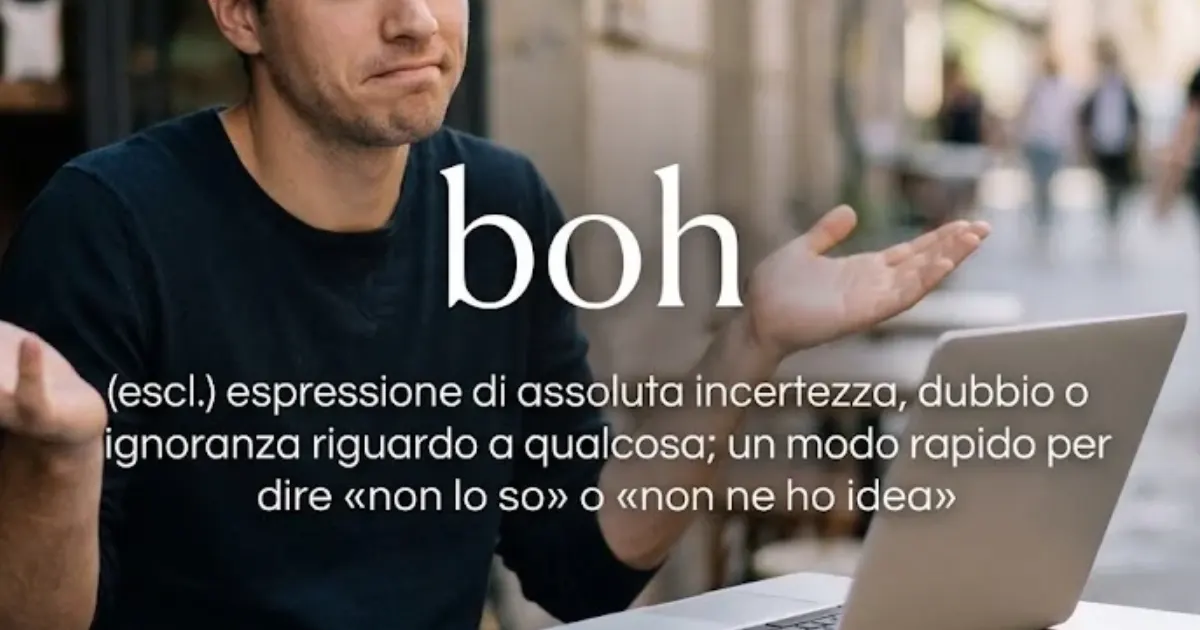
We use it when we don't know the answer to a question, are undecided or simply have no idea what to say.
Its origin is not entirely clear, but we can imagine it as the written representation of a spontaneous sound, the one we make when we don't know how to respond.
A curiosity? The French also have a very similar expression: “Bof!”.
The difference is that our "boh" mainly expresses uncertainty, while the French "bof" is used more often to communicate indifference, perplexity or lack of enthusiasm.
And in Malta? The Maltese also use a curious particle: “ta!”. It doesn't mean "I don't know", but it is often added to sentences to give emphasis, express familiarity or seek confirmation from the interlocutor.
In short, each language has its own little sounds and exclamations which, despite seeming insignificant, manage to communicate a lot!
But how do you say “boh” in English?
There is no single expression that encompasses all the nuances of Italian, but we can use:
- I don't know – I don't know.
- Dunno – Oh God! / I don't know (very informal).
- No idea! – I have no idea!
Example: Where is Luca? I don't know! (Where is Luca? I don't know!)
- Careless
A careless person is a person who is disinterested in everything and everyone, thinking above all of their own interests.
The word comes from the expression “I don't care”, “je-m'en-fiche,” a popular form of the verb don't care, used to express indifference, detachment or disinterest.
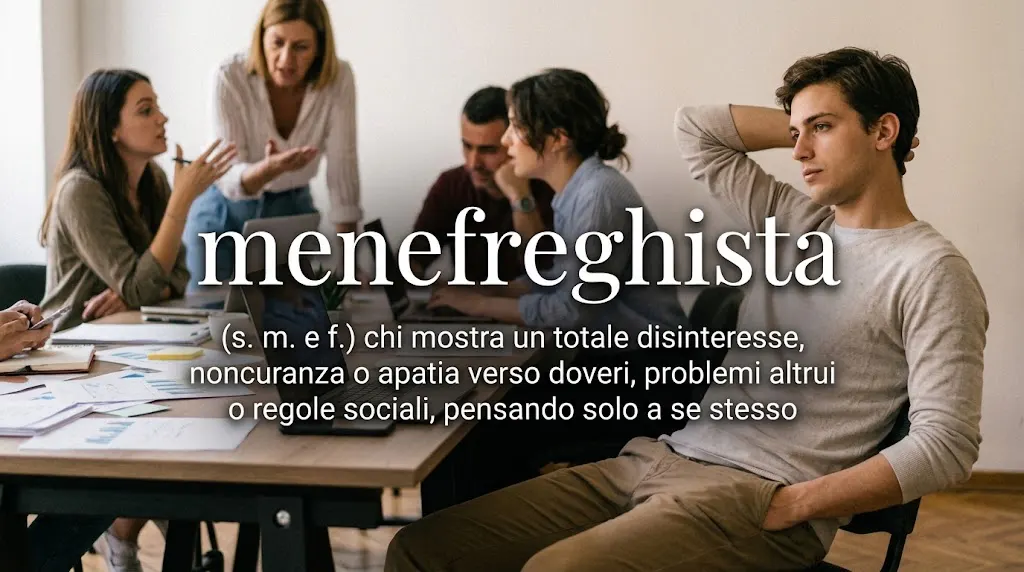
But as they say “menofreghista” in English?
English offers some expressions that are close to the Italian meaning:
- Selfish- Selfish
- He doesn't care– He doesn't care.
- He's so indifferent – It really doesn't matter.
- He's so self-centered – Think only of yourself.
Example: Don't mind him, he is so selfish
The problem is that none of these expressions always encompasses all the nuances of the Italian word “careless”: a person who not only shows indifference, but also often neglects others and his or her own responsibilities.
Knowing these expressions is useful, but then you also have to find the courage to use them! If you ever don't know what to say when you meet someone new, we've rounded up 5 ways to break the ice in English, with simple phrases to start a conversation even if you're shy.
- Cat lady
The term “cat lady” it is associated with a person who particularly loves cats or who even takes care of stray cats.
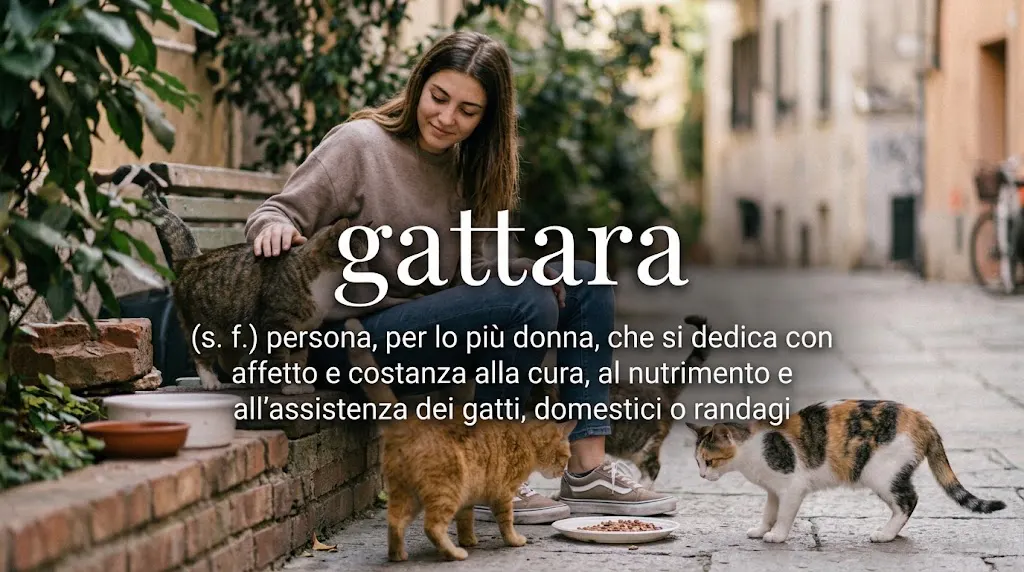
In reality, the origin of the term is twofold, some say that it derives from Pope Innocent, who designated a specific place for the collection of stray cats. This place was called "gattara".
According to the Treccani dictionary, the term derives from the small opening made in the lower part of the doors to let the animals out freely.
Gattara: how does it translate into English?
- Cat lady – Cat lady, woman who loves or takes care of many cats.
- Cat lover – Cat lover (for both women and men).
Example: I love dogs but I'm a cat lady! (I like dogs but I'm a cat lady)
And the tithe? You choose it!
What is that Italian word or expression that you can never translate into English?
Write in the comments or to our email info@maltaforenglish.com, an Italian word that you find very difficult to translate into English.
Learning English doesn't just mean knowing the translation of a word, but also understanding when and how to use it.
And this is precisely the beauty of a study trip abroad: you learn the language during lessons and put it into practice every day, getting to know different people and cultures.
Do you want to improve your English and learn to use it in everyday conversations? Discover ours English courses in Malta and begins to experience the language outside the classroom too.
Why rely on Maltaforenglish to leave for Malta?
Since 2014 Maltaforenglish organises study holidays and language stays in Malta for students, families and adults.
Thanks to the presence in the area, the experience gained with approximately 15,000 students left with us and the possibility of customizing each project, Maltaforenglish guarantees in every trip safety and tranquility.
If you are thinking of studying English abroad and want to understand which solution is best for you, contact us up WhatsApp, do a free quote or follow us on ours social.